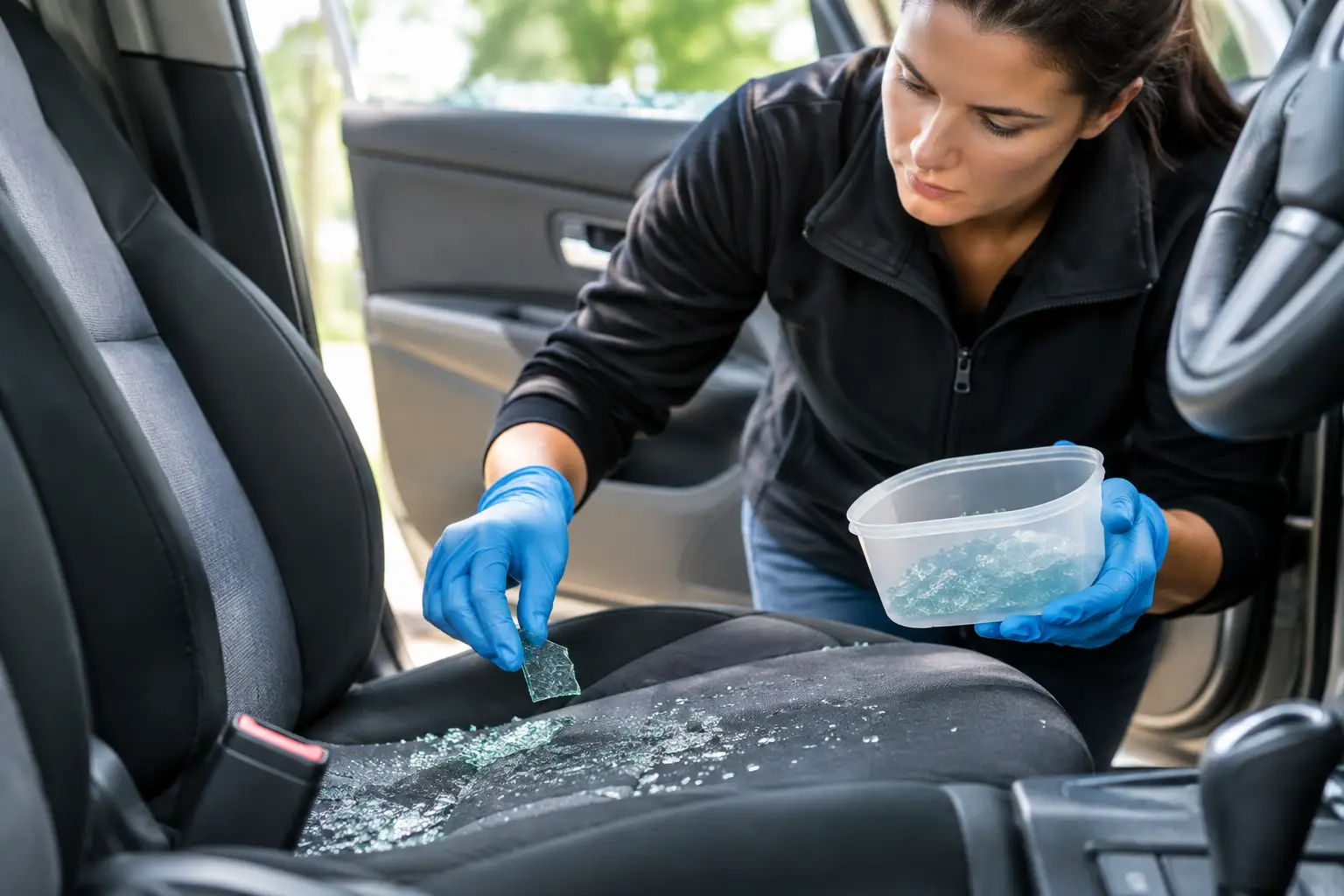
A broken car window creates a mess that keeps moving. Glass works its way into seat seams, floor mats, door pockets, and shoe soles long after the obvious pieces are gone. Knowing how to clean broken glass from a vehicle safely matters just as much as getting the window replaced, especially if children, passengers, or pets use the car.
Start by keeping people away from the damaged area. Then work slowly, from the largest pieces down to the nearly invisible fragments. Rushing this job can lead to cuts, scratched interior panels, or glass left behind where it can damage a tire or injure someone later.
Before You Clean Broken Glass, Protect Yourself
Put on closed-toe shoes before opening the car door or leaning into the cabin. Wear thick work gloves and eye protection, particularly if any loose glass remains in the window frame. Side-window glass is usually tempered, so it breaks into many small, blunt-looking cubes. Those pieces can still be sharp enough to cut skin.
Avoid using a bare hand, a towel, or your sleeve to sweep glass aside. Fabric can trap shards and spread them around the interior. If the vehicle was broken into, do not disturb the area until you have taken photos for your insurance claim or police report, if needed.
Gather a few basic supplies before you begin:
- Thick work gloves and closed-toe shoes
- Safety glasses
- A small broom and dustpan or stiff brush
- A shop vacuum with a narrow crevice tool
- Wide packing tape or duct tape
- A flashlight and a disposable container for glass
A shop vacuum is better than a standard household vacuum for this work. Fine shards can damage a regular vacuum hose, bag, or filter, and emptying it later creates another chance to get cut.
How to Clean Broken Glass From a Car Step by Step
Remove the large pieces first
Carefully pick up the largest pieces from the seat, floor, and door opening while wearing gloves. Place them directly into a rigid container, such as a cardboard box or plastic container with a lid. Do not toss loose glass into a thin trash bag. It can cut through the bag and create a hazard for you or anyone handling the trash.
Use a small brush and dustpan around the door sill, seat tracks, and floorboard. Work toward one collection point rather than sweeping pieces deeper under the seats. If the window is still partly in the frame, do not pull on cracked glass. It may break further or damage the window regulator inside the door.
Vacuum the seats, carpet, and crevices
Once the visible pieces are gone, vacuum the interior slowly. Start at the top of the damaged door area and work downward. Use the crevice tool along window switches, door storage pockets, seat seams, seatbelt openings, floor mat edges, and the tracks beneath power seats.
Move the front seats fully forward and backward so you can vacuum beneath them. In SUVs and trucks, check the rear footwells and cargo area as well. Glass can bounce farther than expected when a window shatters.
For cloth seats, make several slow passes in different directions. For leather or vinyl, use light pressure so you do not grind fragments into seams or scratch the surface. Lift removable floor mats and vacuum both sides, plus the carpet underneath.
Use tape for the tiny fragments
A vacuum handles most debris, but it may miss fine particles embedded in fabric or caught along trim. Wrap wide tape around your gloved hand with the sticky side facing out, then press it gently over upholstery, carpet, and the door sill. Replace the tape as it fills with glass.
A lint roller can work on seats and carpet, but packing tape is often more effective for the larger, sharper particles. Do not press hard on leather, soft trim, or delicate headliners. The goal is to lift remaining glass, not force it farther into the material.
Inspect with a flashlight
Glass reflects light, even when it is hard to see in daylight. Shine a flashlight low across the surface of the seat, carpet, and door panel. Look from several angles. This makes small pieces sparkle and helps you find areas that need another vacuum pass.
Pay close attention to the seat where a passenger would sit, the center console, cup holders, and the rubber weather stripping around the window. Check your shoes before getting back into the vehicle or walking into your home. A single shard caught in a shoe tread can end up on a garage floor or inside the house.
Do Not Forget the Door Panel and Window Track
Broken side-window glass often falls inside the door. You may hear it rattling when you close the door or drive over bumps. Vacuuming the cabin is still worthwhile, but it will not remove glass trapped inside the door panel or window track.
Trying to take apart a modern door panel without the right tools can create new problems. Clips can break, wiring can be damaged, and glass can remain around the regulator. If the window needs replacement, a qualified auto glass technician can remove debris from the frame and door area while installing the new glass.
This is also why taping plastic over the opening should be a short-term solution. It helps keep out rain and wind, but it does not restore vehicle security or remove glass from the door. If rain is expected, cover the opening from the outside and secure the edges without blocking your view or interfering with door operation.
Check Outside the Vehicle Too
Walk around the car after cleaning the interior. Look at the driveway, parking space, and area beside the damaged door. Sweep up visible glass so it does not get tracked into a home, workplace, or neighboring vehicle.
Inspect the tires, especially the one closest to the broken window. Tempered glass usually does not puncture tires as easily as a nail or screw, but sharp fragments can lodge in tire grooves. Use a flashlight to look between tread blocks. If you find anything embedded deeply in a tire, have a tire professional inspect it rather than digging at it with a tool.
If your vehicle was parked in a public lot or on a street, move it only after clearing enough glass from the driver's area to operate safely. Make sure no fragments are under the brake pedal, accelerator, or floor mat.
When Broken Auto Glass Needs Professional Help
You can usually handle surface cleanup after a shattered side window, but replacement should not wait. A missing or broken window exposes the interior to weather, theft, and additional damage. It can also leave loose glass in places that are difficult to reach without removing trim.
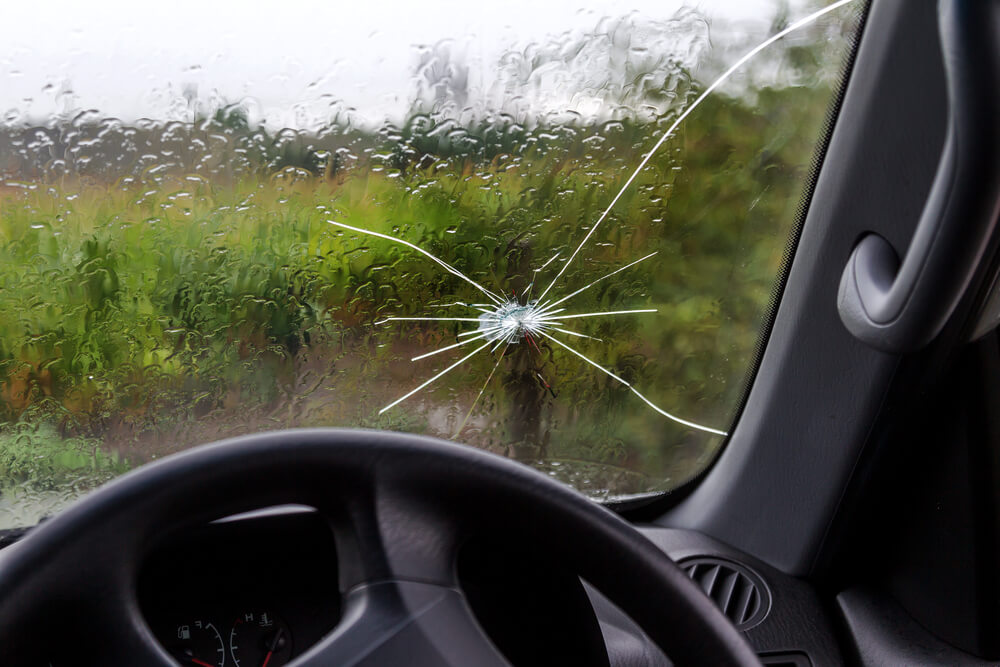
A broken windshield is different. Windshields are laminated, meaning a plastic layer holds much of the glass together. Do not try to peel away cracked windshield glass or drive if visibility is compromised. A crack near the driver's line of sight, heavy spiderwebbing, or glass that is loose in the frame calls for professional replacement.
For drivers in Dallas, Addison, Richardson, Fort Worth, or Irving, mobile service can save a trip to a shop when the car is not secure to drive. Mid Cities Auto Glass can replace damaged auto glass at your location and help ensure the window frame and accessible door areas are properly cleared during service.
A Cleaner Car Is a Safer Car
After one final vacuum and flashlight check, wash your hands and dispose of the glass container according to local trash rules. Keep an eye out for stray fragments over the next few days, especially around floor mats and seat seams. Broken glass cleanup is rarely a one-pass job, but careful work now protects the people who ride in your car later.